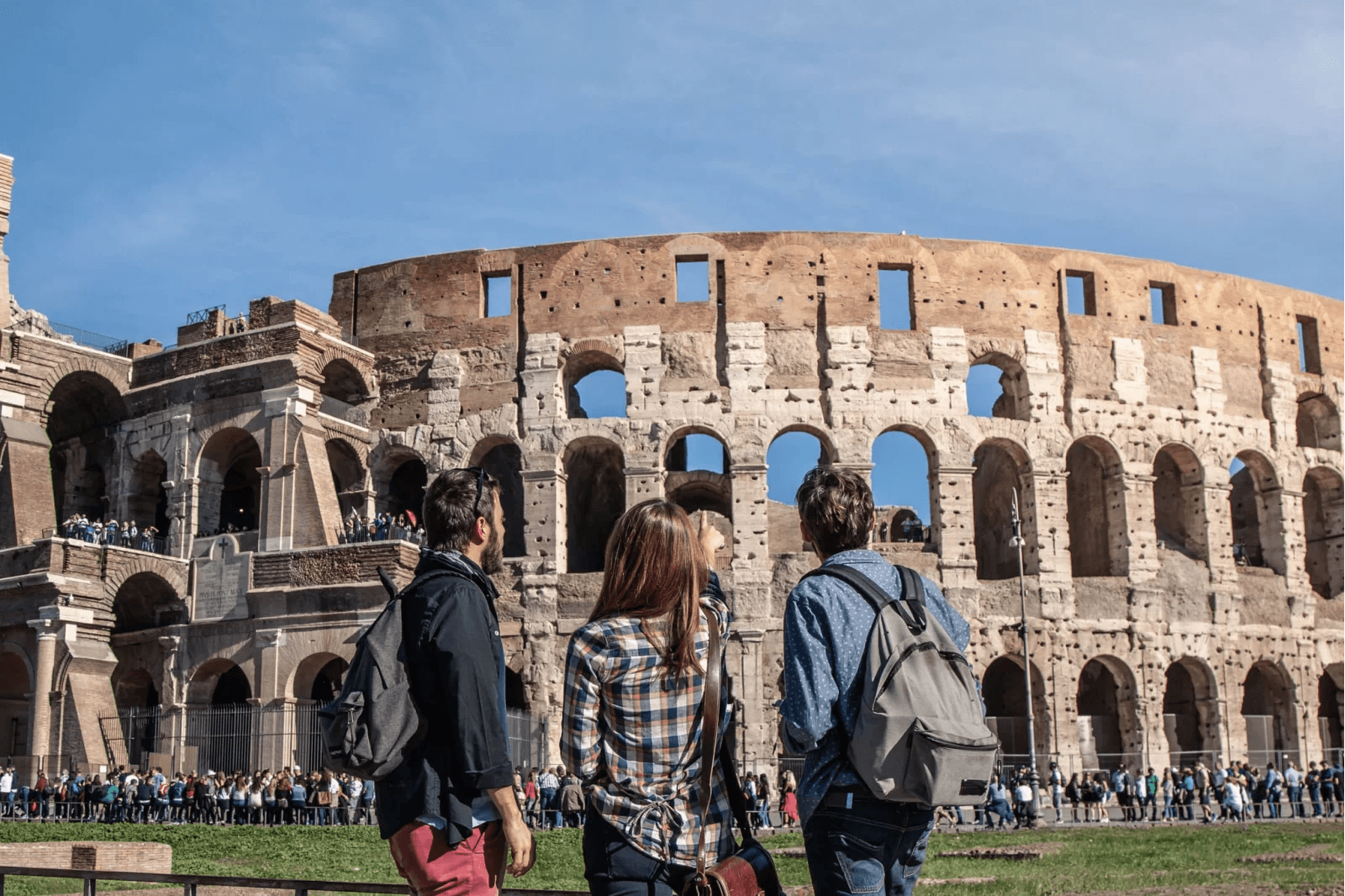
When our daughter graduated with her BSN, my husband and I wanted to celebrate her in a way that matched the season she was stepping into. Not just with a party or a gift, but with trust. From the beginning, our intention was to give her two weeks in Italy alone, not alone in the sense of being abandoned, but alone in the sense of being capable, trusted, and believed in. We wanted it to be a gift of space, the kind that creates room to breathe, to listen, and to meet God in a deeper way. Space to be challenged and a little uncomfortable, to learn how to navigate the unknown, and to step back and realize just how big the world really is. Italy was not a reckless choice. My husband lived there for three years, so it was familiar to us in a way it is not for many people. We knew the culture, the pace, and the places. We also knew it is considered one of the safer countries to travel in. What we did not fully anticipate was the response we would receive. The feedback came quickly and from many directions. People were taken aback. They were stunned that we would “let her” go alone. While some of it was framed as care and concern, much of it was rooted in fear. The issue was not simply that people had opinions, but that they felt compelled to speak those opinions directly into her. Instead of asking how she had prepared, many people sat in disbelief. Instead of offering encouragement, they offered worst case scenarios. Instead of strengthening her for the unknown, they unintentionally planted doubt inside her. And it worked, at least for a moment. Their fear fed her mind and made her nervous. She began to second guess herself, not because she was unprepared, but because fear has a way of attaching itself when it is spoken often enough. It is sobering how quickly borrowed fear can become personal fear, especially when it comes from voices we respect. Scripture is clear about the power of words. Proverbs 18:21 tells us that the tongue holds the power of life and death. Words do not simply express what we feel. They shape what others begin to believe. I kept thinking about something many of us heard growing up, a saying that feels almost forgotten now: if you don’t have anything nice to say, don’t say anything at all. What happened to that? Somewhere along the way, we started believing that every opinion deserves a microphone, that every concern must be voiced, and that being honest automatically means being helpful. But this applies to opinions too. Not every thought needs to be shared, and not every fear needs to be handed to someone else to carry. Scripture calls us to wisdom and restraint, not because honesty is wrong, but because timing, tone, and motive matter. Proverbs 13:3 reminds us that those who guard their mouths preserve their lives. Colossians 4:6 calls our words to be full of grace. Grace does not mean we never speak hard things, but it does mean we pause long enough to ask whether our words will build faith or quietly plant doubt. Two weeks later, she is home, safe. The story fear tried to write never came true. She traveled alone from Milan to Venice, then to Florence, through Tuscany, and finally into Rome. She saw every sight there was to see. Her feet hurt and her legs were tired, but she kept going. She navigated trains, languages, directions, and moments of uncertainty, and she did it all on her own. Not because fear was never present, but because she learned it did not get the final word. 2 Timothy 1:7 says God has not given us a spirit of fear, but of power, love, and a sound mind, and I watched that verse move from something written on a page to something lived out in real time. Something sacred also happened in the quiet spaces between destinations. There is a difference between traveling with people and traveling alone. Alone time has a way of bringing things to the surface, not to shame us, but to strengthen us. There were no familiar voices to lean on, no one else to speak for her, no one else to decide for her. It created space for prayer, for listening, and for courage to grow. God often meets us in those places where comfort is stripped away and dependence deepens. If I could offer anything to parents, grandparents, best friends, significant others, brothers, and sisters, it would be this. Your fear often comes from a place of love and genuine concern, and that matters. Caring means you feel the weight of what could happen. But love also calls us to be gentle with our words. Before speaking, it helps to pause and ask whether what we are about to say will prepare someone or simply transfer our own anxiety. Instead of leading with fear, lead with preparation. Help your traveling loved ones think through plans, safety, and logistics. Ask good questions. Offer wisdom when it is invited. Find ways to express your worry so your own heart feels safe and heard, without placing the burden of that fear on theirs. And then, when the time comes, let them go with joy. Let them be excited. Let them experience what God has placed in front of them. (And above all let them know you’ll always answer their phone call, even at 2am because they need help finding the train🤣) Psalm 56:3 says, “When I am afraid, I put my trust in You.” Trust does not mean ignoring risk, but it does mean releasing control. It means believing that God is with them on planes, trains, city streets, and in moments we cannot manage from afar. This experience has made me reflect on how many things we have not tried, not because God did not invite us, but because someone else’s doubts lingered long enough to talk us out of obedience. How many dreams have dimmed because fear was passed around like wisdom. How many leaps we avoided because the static of other voices grew louder than the steady voice of the Lord. Scripture consistently calls God’s people to courage, not because the road is always safe, but because He is faithful. Joshua 1:9 reminds us to be strong and courageous, for the Lord our God goes with us wherever we go. That promise does not remove preparation, but it does remove the lie that fear should be our decision maker. So be wise. Prepare well. Ask questions. Pray. But do not let fear have the microphone. Do not let other people’s fear become your compass. Sometimes love looks like encouragement instead of commentary, prayer instead of prediction, and trust instead of control. 1 Thessalonians 5:11 tells us to encourage one another and build one another up, and I am learning just how much courage grows when it is nurtured instead of questioned. If you feel the Lord inviting you into something and fear begins to rise, do not automatically assume it is a stop sign. Sometimes it is simply a signal that you are standing at the edge of growth. Go on the trip. Take the leap. Have faith in the Lord. Turn down the static, and listen for the voice that has always been steady.